
Fellows Cohort 16
Fellows Cohort 16
Culturally Relevant Conservation
CCC is thrilled to welcome Cohort 16 into our Fellows Program!
Each year, the CCC engages in a competitive process to select a new new cohort of Fellows. A total of six projects make up Cohort 16, which includes a combination of graduate students, faculty members, and conservation practitioners from across the globe.
Bringing together Fellows from different countries and contexts creates an ideal learning environment that leverages the unique experiences, perspectives, and knowledge each Fellow brings to bear. Together, we will create productive platforms for people to have a voice in stewarding their local places and finding common ground among many different values. Working in their learning cohort, Cohort 16 Fellows will advance culturally relevant conservation by ensuring local participation in decision-making. Reflective practice is an important aspect of the fellowship, as Fellows unpack the conditions that foster success and as well as those that can lead to failure.
Cohort 16 consists of 20 Fellows pursuing 6 conservation projects, working with communities in 7 countries. Underlying themes that tie these projects together include incorporating different knowledge systems into land stewardship, managing human-wildlife conflict, and elevating the role of women as stewards of the landscape.
Meet the Fellows
Canopy & Ember

Carly Quisenberry (Cherokee)
A CSU Ph.D. candidate, Carly’s doctoral research centers on Indigenous women’s leadership and knowledge in natural resource management, advancing equity and inclusion in conservation.

Elisha Flores (Hoopa Valley Tribe)
Program Specialist, Bureau of Indian Affairs (BIA) Branch of Pathways. Elisha’s work centers on workforce and youth development by connecting Native students to paid internships with various BIA and Tribal offices, with a particular focus on forestry and natural resources fields.

Jaime Yazzie (Diné)
Senior Research Coordinator, Northern Arizona University Southwestern Mountains Climate Resilience Center. Jaime’s research focuses on the intersections between forest ecology, Diné knowledge, climate change, dendrochronology, and Indigenous research methodologies.

Nicole Stiffarm (Chippewa Cree Tribe of Rocky Boy, MT)
Tribal Partnerships Manager at Environmental Policy Innovation Center. An experienced Program Manager with a demonstrated history of working within workforce development and internship fields.
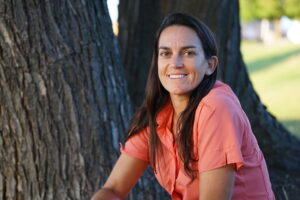
Dr. Serra Hoagland (Laguna Pueblo)
Dr. Hoagland is the 3rd native female in the United States to receive a PhD in forestry, she was the first and only native co-author on the 4th National Assessment of Tribal Forests and Forest Management in the United States. Dr. Hoagland has published 10 books and nearly 30 peer-reviewed articles focused on natural resource management.
Project Summary
Canopy & Ember (C&E) is an Indigenous women–led collective advancing leadership, belonging, and cultural integrity in forestry and wildland fire. Representing Tribal Nations, academia, federal agencies, and nonprofit organizations, C&E was created in response to the persistent underrepresentation of Native women in leadership roles across these sectors, despite their growing presence in the workforce. Built by Indigenous women for Indigenous women, the initiative is grounded in shared lived experience, cultural knowledge, and a commitment to transforming the systems in which we work.
As C&E evolves into a formal organization, our future work will focus on building the infrastructure needed to sustain Indigenous women’s leadership and transform workplace cultures. Planned activities include a workforce audit to assess women’s experiences and identify systemic barriers; the development of a Native women in forestry and fire network to foster connection, mentorship, and collaboration; and structured mentorship and leadership development programming grounded in a ripple-effect model of intergenerational knowledge transfer. We will also host safe, culturally grounded gatherings that address isolation, support healing, and enable collective visioning, while engaging allies and partners across sectors to share responsibility for institutional change.
The lack of Indigenous women leaders in forestry and wildland fire compromises equity, cultural resilience, and ecological stewardship. By uplifting Indigenous women and transforming the environments in which they work, Canopy & Ember is cultivating leadership rooted in cultural knowledge and ensuring more resilient landscapes and communities for future generations.
Collaborators
Networks of Place: Human Mobility, Territorial Governance, and Conservation in Indigenous Territories of the Bolivian Amazon

Andrea Baudoin Farah, PhD
Assistant Professor at Colorado State University’s Department of Ecosystem Science and Sustainability and co-director of the Just Social Ecological Transformations in Latin America Program. Andrea has a personal and professional commitment to social-ecological wellbeing in Latin America, in particular the Bolivian Amazon.

Carla Virginia Rodas Arano, Executive PhD
Working as the Director of the Association for Ecological Defense and the higher University of San Andrés, Carla is an anthropologist with areas of expertise in territory, governance, socio-environmental studies, cultural landscape studies, and migration. Carla has worked with Indigenous communities in several ecological regions in Bolivia, Ecuador, and Chile.

Marielle Cauthin Ayala, PhD Student

Daniela Romero Romay, MSc
Daniela’s work focuses on territorial governance, agricultural production, environmental crises, food systems, and community institutional frameworks, with a gender perspective. Daniela has worked directly with rural and Indigenous communities, local authorities, and producer associations, mostly in the Bolivian Altiplano.

Adalberto Pariqui
President of the Organization of Riverine Indigenous Communities of the Mamoré River (SCIRRM)

Jeaneth Valdez Villca and Karen Cartagena
President and Technical Support Staff of the Tacana Indigenous Women Council (CIMTA)
Project Summary
The role of Indigenous Peoples in global environmental stewardship is increasingly recognized. This is due not only to the fact that their lands contain important biodiversity and establish nearly one-third of the planet’s land area, but also to the fact that they possess governance practices and knowledge accumulated over millennia that support ecosystem preservation. However, in contexts such as the Amazon, beyond governments’ neglect, Indigenous territories are at risk because of the expansion of extractive frontiers and their effects.
Indigenous peoples, to meet their needs and aspirations, are compelled to adopt life strategies that often involve moving both within and beyond their territories and forming connections with other rural or urban spaces. These strategies include dividing their time between multiple economic activities and entering new labor markets. These “centrifuge processes” pose challenges for Indigenous territorial governance, cultural reproduction, communal well-being, and conservation. The complexity of Indigenous Peoples’ movement, multi-residence, and pluri-activity (MMRPA) strategies is understudied and underestimated, despite their far-reaching implications.
This project emerges from the identification of “depopulation” as a priority problem for Mojeño-trinitario, Yuracaré, and Tacana Indigenous residents in the upper-mid Mamoré river and the Tacana 1 Indigenous Territory in the Bolivian Amazon. Indigenous authorities, leaders, and residents are worried about what could happen to their territories if the current out-migration trends persist. At the same time, these new dynamics can generate conflicts around natural resource use and access between more permanent community members and those who come and go. Conservation practitioners working in these areas also face challenges due to the limited integration of the realities of mobility and sociocultural/intergenerational change in conservation approaches, which often aim to “fix people in place”.
Researchers, practitioners, and Indigenous leaders are working together on this project to understand how to include Indigenous realities of MMRPA into conservation strategies and territory planning.
Collaborators
- Organization of Riverine Indigenous Communities of the Mamoré River (SCIRRM).
- Organization of Riverine Indigenous Women of the Mamoré River (SMIRRM).
- Tacana Indigenous People Council (CIPTA).
- Tacana Indigenous Women Council (CIMTA).
- Wildlife Conservation Society (WCS).
- Llanos de Moxos Working Group (GTLM).
Centering women’s wellbeing for mangrove and piangüa conservation in the pacific coast of Colombia

Paula Cepeda-Mahecha
Paula is a PhD candidate of the Program of Human Dimensions of Natural Resources at Colorado State University.

Merling García
A pianguera and local leader of the association FUVIPIA (Foundation of women guardians of the piangüa) from the Community Council of La Plata, Bahía Málaga, Colombia.

Aura-Nelly Díaz
A pianguera and local leader of the association Raíces Piangueras (Pianguera roots) from the Community Council of La Plata, Bahía Málaga, Colombia.

Joel Correia, PhD
Geographer, Assistant Professor in the Human Dimensions of Natural Resources Department at Colorado State University and co-Director of the Just Social-Ecological Transformations in Latin America Program.
Project Summary
Collaborators
Protecting primates in Ghana

Veronica Dandzo-Adzagudu
Head of Fundraising and Research at Threatened Species Conservation Alliance, Veronica has contributed to the development of management and conservation action plans such as the Ankasa-Tano Community Resource Management Area Constitution and Bye-laws, and the Ankasa-Tano Transboundary Forest Management Plan, which provides critical habitat for primates in Ghana and Cote d’Ivoire.

Nicole Reese
Executive Director, Crowd Conservation. Nicole is a facilitator and storyteller supporting collaborative projects regionally and internationally.
Project Summary
The global populations of the Critically Endangered White-thighed Colobus and the Vulnerable Lowe’s monkey have declined as a result of habitat loss and hunting for bushmeat and pets. Socio-ecological surveys revealed the presence of both primate species in the Tano River Crocodile Sanctuary (TRCS). Located in the upstream portion of the Tano river in the Bono East region of Ghana – an area, popularly known as the food basket of Ghana due to its major contribution of staple food crops, TRCS does not only represent a critical riparian forest ecosystem for threatened wildlife, but also supports small-scale agricultural livelihood.
Our surveys highlight significant threats to primates including habitat loss resulting from clearing of riparian vegetation for farming activities, unsustainable agricultural practices such as slash and burn, and hunting for bushmeat. More disturbingly, local people are not aware of the conservation importance of these primates. While these imperiled species are fast disappearing in most of its ranges in Ghana, there is no national or local action plan to guide on-ground implementation of conservation strategies to safeguard the species from local extirpation.
This project seeks to adopt a collaborative approach, leveraging on already existing traditional knowledge systems in the project area, to raise awareness on the conservation importance of these species and co-develop a local primate conservation action plan. Using a stakeholder analysis, we will ensure relevant stakeholders are identified and well-represented in co-developing the action plan. This local action plan will serve as a blueprint with threats and appropriate conservation interventions collaboratively identified, fostering local ownership in its implementation. This action plan will also serve as an adaptive guide to conserving the threatened primates in other parts of the country where remnant populations still exist, and ultimately serve as a catalyst for a national primate conservation action plan for the white-thighed colobus with strategies to save remnant populations across Ghana.
Collaborators
- Traditional Authorities of fringe communities of the Tano River Crocodile Sanctuary.
- Landowners and farmers in fringe communities.
- Forest Service Division/ Wildlife Division of the Forestry Commission of Ghana
- Techiman Municipal Assembly
Protecting crops, protecting cranes
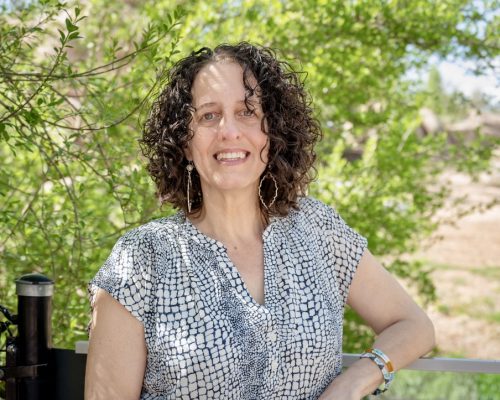
Lynn Von Hagen, PhD
Africa Conservation Program Director, Denver Zoo Conservation Alliance. Lynn is a conservation scientist with nearly a decade of field experience in Africa focused on human–wildlife conflict, elephant behavior, and community-based conservation.

Dr. Christophe Ntakirutimana
Field Veterinarian, Rwanda Wildlife Conservation Association. He is responsible for veterinary clinical interventions for wildlife in and outside the National Parks of Rwanda including snare removal, diagnosing and treating sick animals, and the relocation of wildlife when needed. He also provides veterinary healthcare to rehabilitate Grey Crowned Cranes and other wildlife species accommodated at Umusambi Village sanctuary.

Bernard Ndayisaba
Senior Field Officer, Rwanda Wildlife Conservation Association and liaison to the Community Conservation Champions program. Bernard is a committed Rwandan conservationist with experience in biodiversity protection and community-based conservation. As Senior Field Officer at RWCA, he oversees the monitoring and protection of Grey Crowned Cranes and some of the community involvement and livelihoods programs.
Project Summary
A decade ago, Rwanda Wildlife Conservation Association (RWCA) embarked on a journey to reverse the illegal pet trade of endangered Grey Crowned cranes in Rwanda. Several approaches have been employed to successfully achieve the mission. Community involvement played a significant role in reversing the decline of the crane population in different habitats across the country. However, as the population of this iconic bird recovers in the wild, their interaction with subsistence farmers and their crops is significantly increasing. Several crop raiding (when birds encroach into the croplands and uproot germinating plants) complaints have been raised by the community around Rugezi marsh in the North of Rwanda. In addition, two incidents of crane poisoning occurred in the wetlands of Nyagatare and Gatsibo districts in the East of Rwanda, where entire flocks were instantly killed using a banned pesticide. This human crane conflict has a significant impact on community livelihoods by reducing crop productivity which leads to food insecurity. It can also be a reason for retaliation which jeopardises crane populations.
With the CCC Fellows program, we aim to find a sustainable solution to crop raiding, thereby promoting the harmonious coexistence between cranes and farmers across the country. In this project, we will test physical bird deterrents in several settings, including Rugezi Marsh and Muvumba Wetland. During these experiments, community farmers at both study sites will be at the centre of designing solutions to address the escalating conflicts. This approach is believed to boost ownership and trust between our organisations and the community as they contribute to practical and sustainable solutions to this issue affecting their community. Local Indigenous knowledge and feedback from Rwandan farming communities will be vital to this project.
Moreover, we aim to test deterrents that fit the local context in terms of availability, affordability, and practicality. Following testing, findings will be distributed and shared with local stakeholders and collaborators. After the experiments conclude, effective mitigation strategies (to be recommended by the project) will be extrapolated to other crane conservation areas at country and cross-border levels to benefit both farmers and crane populations.
Collaborators
- Rwanda Wildlife Conservation Association (RWCA)
- Denver Zoo Conservation Alliance (DZCA)
- Local government agencies (District and Sector Agronomist)
- Community farmers
Building Tolerance: Co-Designing Social Protection with Communities on the Frontlines of Human-Carnivore Conflict in Tanzania

Abigail Whittaker
PhD Student, Human Dimensions of Natural Resources, Colorado State University / Graduate Associate, Center for Human-Carnivore Coexistence

Jonathan Salerno, PhD
Associate Professor, Human Dimensions of Natural Resources, Colorado State University / Co-Director, Center for Human-Carnivore Coexistence

Ana Grau Valenciano, MSc
Research and Monitoring Lead, Lion Landscapes

Wiston Mtandamo
Field Programmes Manager for Ruaha, Lion Landscapes

Joseph Francis Kaduma
Data and Research Manager, Lion Landscapes

Masai Loreu
Field Researcher, The Peregrine Fund
Project Summary
Large carnivores are among the world’s most threatened species, and human activities top the list of factors contributing to their decline. Persecution and habitat loss to land conversion are dominant drivers, and carnivore conflicts with humans will only increase under climate change. These conflicts are already disproportionately high in lower-income countries, where human attack rates are growing faster, attacks are more likely to be fatal, and attacks happen predominately during livelihood activities—in other words, it’s hard for poor people to avoid large predators while meeting their families’ needs. Yet if we want robust populations of large carnivores to persist in the wild, we need to find ways to make the socioecological landscape outside of protected areas more hospitable to the presence of these species. This will require people to become more tolerant of the risks and costs of sharing space with dangerous carnivores, particularly in the places where human lives are at greatest risk.
Previously, this team collaborated to interview pastoralists near Ruaha National Park in Southern Tanzania, exploring the factors that drive tolerance (or intolerance) for carnivores like lions, leopards, and hyenas. It became clear that other factors like increasingly unpredictable rainfall and expanding land-use change are forcing people to move their livestock farther and more frequently to survive the dry season. This strains human and livestock health, putting pastoralists in a fragile position where one negative shock—a year of drought, an injury that runs up hospital bills, or a lion attack on their herd—might be catastrophic to the household. Our interviews underscored that pastoralists value assistance from Lion Landscapes that helps to buffer them from these shocks—things like health insurance, free meals for schoolchildren, and no-cost cattle vaccinations. In other words, they recognize their vulnerability and value what economists would call “social protection” or “safety net” programs.
The underlying relationship here—that decreasing peoples’ vulnerability in one area increases their ability to cope with other stressors—is supported by our past work and a strong evidence base in the literature. What we don’t know is whether the programs currently offered by Lion Landscapes or other government or NGO actors are optimal for decreasing vulnerability. Would pastoralists choose the forms of assistance that Lion Landscapes typically provides if they had a voice in the program design? And do these forms of assistance help them make durable changes that reduce their vulnerability to increasing carnivore encounters, climate change, and land conversion in the long-run, or would the tolerance gains that Lion Landscapes’ work has produced decline if the funding for these benefits ended?
Through this project, we want to learn about pastoralists preferences for different forms of social protection, and to understand how having access to those safety nets changes household decision-making. We seek to compare what different forms of benefit delivery could mean for pastoralists’ vulnerability and their ability to tolerate the risks and costs of sharing space with large carnivores over time. Through this community-embedded work, we aim to co-design guidance that could inform Lion Landscapes’ strategy—as well as other NGOs and government agencies working with pastoralists—at a time when funding is austere and every dollar needs to have maximum impact. Together, we believe that we can build more equitable, sustainable solutions for people and wildlife on the frontlines of conflict.
Collaborators
- Colorado State University Center for Human-Carnivore Coexistence
- Lion Landscapes