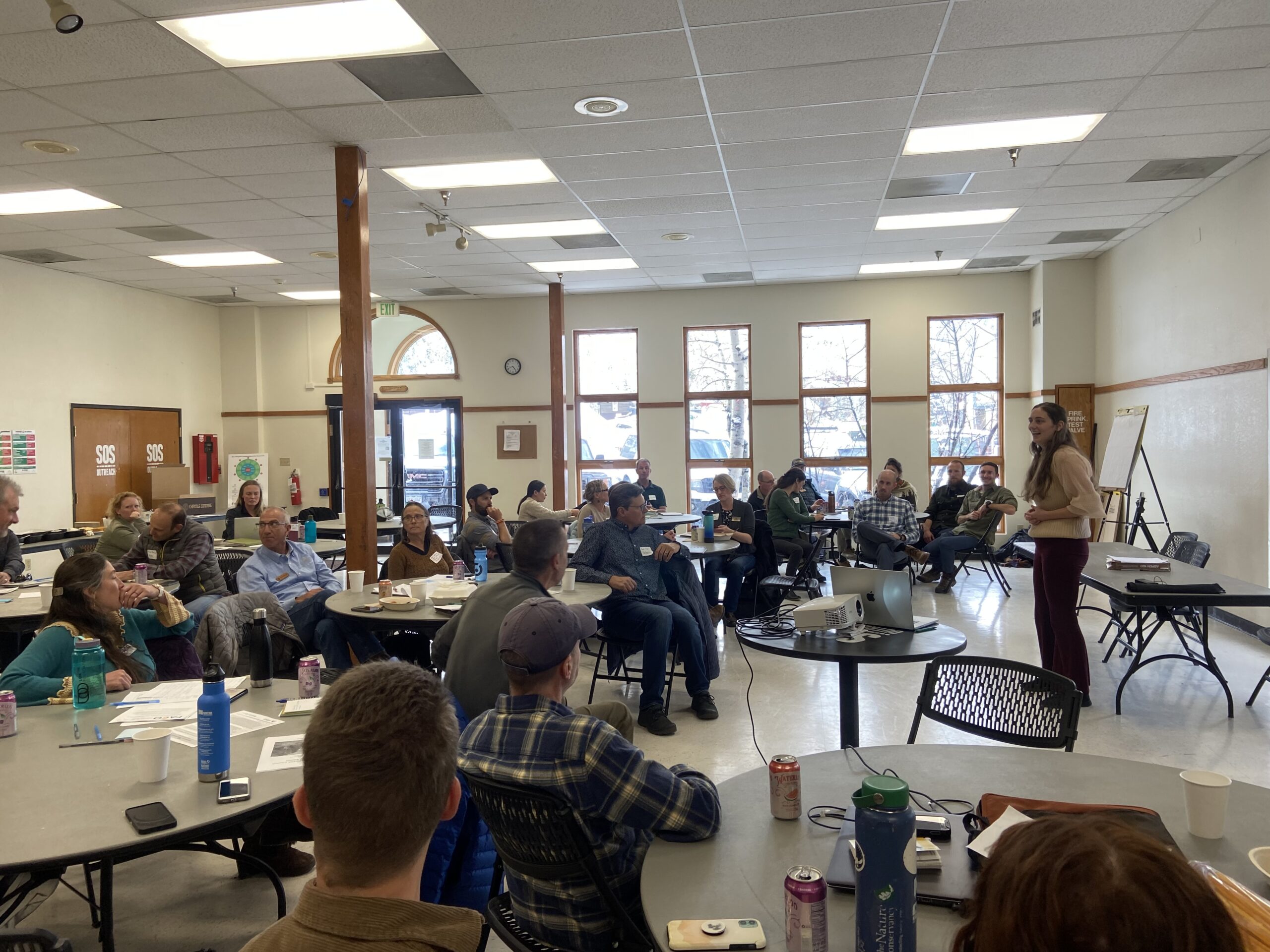


Training: Taking Action with the Forest Resilience Planning Guide | 1pm – 5pm | Western Colorado University, University Center Ballroom | Move your collaborative from vision to implementation using the Colorado Forest Resilience Planning Guide. Through peer discussion, hands-on exercises, and real-world examples, you’ll explore practical tools and strategies to advance forest collaboratives. Bring your own experiences and challenges, and leave with ideas, resources, and next steps you can take back to your partnership to keep momentum moving forward. Ticket price includes a hard copy of the Colorado Forest Resilience Planning Guide and refreshments. Hosted by CDR Associates and the Colorado Forest Restoration Institute. | $50
Training facilitators:
Avista Fire Resilience Challenge: Engage Your Community in Resilience Planning Through Scenario-Based Role-Play Games | 5pm – 6pm | Western Colorado University, University Center, North Conference Room, Room 218
Join us for an interactive session featuring a wildfire resilience game developed by the CIRES Center for Education, Engagement and Evaluation at CU Boulder. Game participants will work together to invest in wildfire resilience strategies for their community and then experience the consequences of a wildfire impacting a local neighborhood. The game was developed in the aftermath of the Marshall Fire in collaboration with local teachers and recovery managers. It incorporates trauma-informed practices while addressing challenges related to affordable housing, social vulnerability, and community recovery. Although the game was originally designed for K-12 classroom settings, it has also been successfully adapted for Community Game Nights that engage residents, local leaders, and stakeholders in resilience planning and decision-making.
Facilitated by Katya Schloesser (Associate Director for Curriculum and Teacher Training, Cooperative Institute for Research in Environmental Sciences, University of Colorado Boulder)
Welcome Social | 6-8pm | Western Colorado University, Art Gallery | Welcome to Gunnison! Join us for an evening of networking, food, and drink. Heavy hors d’oeuvres and one drink ticket will be provided; cash bar available for additional drinks. | Included with base registration cost.
Location: Western Colorado University, University Center Ballroom
8am – 9am | Coffee, pastries, & unstructured mingling (coffee & pastries provided)
9am – 9:30am | Welcome to Summit!
9:30am – 12pm | Colorado Cafe – table discussions and case studies that align with the 30-Year Vision for Forest Health in Colorado
Featuring an introduction by Rebecca Samulski (Executive Director, Fire Adapted Colorado) and Courtney Young (Forest Health & Wildfire Mitigation Program Administrator, Colorado Department of Natural Resources)
Click through the tabs below to learn about our 10 Colorado Cafe table topics. Each participant will choose THREE to attend:
Facilitated by Christina Burri (Deputy State Forester, Colorado State Forest Service) and Alison Lerch (Assistant Director, Forest Health and Wildfire Mitigation, Colorado Department of Natural Resources)
After 2025 forest health surveys detected a new mountain pine beetle epidemic threatening Colorado’s Front Range communities, the Ponderosa Mountain Pine Beetle Task Force was launched in early 2026 to develop ‘coordinated, science-based strategies to protect Colorado’s forests, communities, critical infrastructure, and water resources over the next decade.’ The Task Force is co-chaired by the Directors of the Department of Natural Resources, Colorado State Forest Service, and Division of Fire Prevention and Control, and consists of nearly 36 appointed members. In this table session, we will share an update on the Task Force’s progress so far, what to look forward to in 2027, and how collaboratives can engage with the work of the Task Force.
Facilitated by Tim Pinnow (Chief Executive Officer, West Region Wildfire Council)
The mission of West Region Wildfire Council (WRWC) is “Building wildfire resilient communities in Western Colorado.” At this table, we’ll discuss the life cycle of the collaborative, how it has changed over time, and how collaboratives can remain resilient through changing and uncertain times, using examples and insights gained from WRWC’s nearly 20 years of work.
Facilitated by Rebecca Dannels (GIS Specialist, Colorado State Forest Service) and Phoebe Bauer (GIS Analyst, Colorado State Forest Service)
At this table, participants will explore collaborative mapping as a tool for “collabor-action” through a series of applied examples developed with CSFS and local partners. The discussion will highlight the goals of collaborative mapping, identify approaches that are proving effective, and consider opportunities to strengthen and improve these tools for future use.
Facilitated by Rebecca Samulski (Executive Director, Fire Adapted Colorado)
At this table, FACO will present the newly released Wildfire Mitigation Matters Hub Storymap, a project supported by the Colorado State Forest Service. Participants will have an opportunity to explore 30 stories of wildfires interacting with a range of mitigation actions across Colorado and share their ideas for leveraging this new resource and contributing more success stories over time.
Facilitated by Julie Shapiro and Lili Girodie (Keystone Policy Center) and Scott Woods (Colorado State Forest Service).
The Wildfire and Watershed Initiative for Resilient Colorado (WWIRC) advances statewide sustainable public-private funding to enhance the pace and scale of catastrophic wildfire risk reduction and watershed resilience. In this discussion, we’ll explore the state, local, federal, private, and public sector strategies needed to support sustainable funding – and how collaboratives can help drive success.
Facilitated by Robert Scott and Jon Rosborough (Protect What Matters Campaign Strategists)
Colorado residents broadly support active forest management to prevent catastrophic wildfire, yet aren’t participating in the statewide debate on the topic. At this table, you’ll hear how Forest Trends research provides a communications framework to make this important work personally relevant to motivate action, and how this effort is activating on Colorado’s front range.
Facilitated by Ashley Prentice (Forest Resources Analysis Specialist) and Audrey Miles-Cherney (Upper S. Platte Partnership Watershed Coordinator, Colorado State Forest Service)
Are you carbon-curious, a carbon expert, or somewhere in between? We want to have a conversation with you! The focus will be on what questions you have, resources you already use/know, and gaps you hope to have filled. We will provide an introduction on where we are today in terms of Colorado legislated carbon-related mandates and projects supported by CO State Forest Service and then move into interest-led conversations. Come join a conversation on the state of CO forest carbon and share where you want the conversation to grow.
Facilitated by Andrew Slack (Colorado Forest Restoration Institute) and Rob Addington (The Nature Conservancy)
This session will explore climate adaptation concepts designed to inform strategies and decision making that promotes forest resilience and adaptation to a changing climate. Participants will review key principles from widely used climate adaptation frameworks and approaches (e.g. Resistance, Resilience, Transition) and work through applying these principles to locally relevant strategies for management actions in Colorado’s forests.
Facilitated by Megan Maxwell (Executive Director, Colorado Timber Industry Association) and Amorina Lee-Martinez (Program Assistant, Dolores Watersheds Collaborative)
The timber industry is a vital player in moving forest management projects from planning to implementation. At this table, you’ll hear the story of the partnership between the Dolores Watershed Collaborative (DWC) and the Colorado Timber Industry Association (CTIA), learn practical tips for meaningfully engaging with your local timber industry, and then discuss barriers and opportunities for deepening the relationship with the timber industry and place-based forest collaboratives.
Facilitated by Katya Schloesser (Associate Director for Curriculum and Teacher Training, Cooperative Institute for Research in Environmental Sciences, University of Colorado Boulder)
The Hazard, Education, Awareness, and Resilience Task (HEART) Force program partners with rural middle and high schools across Colorado to empower students to strengthen community resilience to wildfire, flood, and drought. Join Program Manager Katya Schloesser to learn about the HEART Force curriculum, including scenario-based role-play games that help students explore local hazards, evaluate resilience strategies, and take informed action in their communities. Discover how you can engage youth as leaders and partners in building a more resilient future for your community.
12pm – 1pm | Lunch (included with registration)
1pm – 2:30pm | From Planning to Action: Understanding Collaborative Readiness Through the Upper Gunnison Shared Stewardship Council
Featuring an introduction and facilitation by Ch’aska Huayhuaca (Colorado Forest Restoration Institute) and Laura Danz (Colorado Forest Restoration Institute)
What does it take to move a collaborative plan off the shelf and into action? Learn from the Upper Gunnison Shared Stewardship Council’s experience building readiness for implementation across a complex landscape.
Panelists:
2:30pm – 2:50pm | Break
2:50pm – 3:40pm | Agency leadership panel
We’ll learn about how land management agencies are working toward the Colorado 30 Year Vision, and how forest collaboratives can get involved. Then, we will ask a few questions developed day-of based on Colorado Cafe table discussions.
Facilitated by Audrey Miles-Cherney (Upper S. Platte Partnership Watershed Coordinator, Colorado State Forest Service)
Confirmed panelists:
3:40pm – 4pm | Closing
4pm – 6pm | Happy hour (heavy hors d’oeuvres included + a drink ticket for those who submit a survey)
$50 (includes lunch)
Stop 1: Bertha Gulch Stewardship Project
The Bertha Gulch Stewardship Project is a perfect example of “collabor-action”, collaboration in action. This recently completed 155-acre cross-boundary stewardship project consisted of 20 acres on private property and 135 acres on USFS lands, that involved multiple different partnerships including the Colorado State Forest Service (CSFS), US Forest Service, National Forest Foundation, and private landowners, and was funded using Healthy Forests Vibrant Community (HFVC) state grant funding. The HFVC fund in Colorado provides state financial support administered by the CSFS to reduce wildfire risks, promote watershed resilience, support local wood products businesses, and combat emerging forest health threats like the mountain pine beetle. This priority area was identified by the Upper Gunnison Water Conservation District, Gunnison County Community Wildfire Protection Plan, and the Taylor Adaptive Management Group. From a landscape scale view, this section of land was the missing piece of the puzzle, so to speak, between previously harvested ridgetop fuel breaks on US Forest Service lands and defensible space/hand thinning projects on private lands. CSFS capitalized on previously built relationships, collaboration, and momentum from prior projects to gain access to this private parcel and surrounding landlocked US Forest Service land to implement Lodgepole pine clear cuts, overstory removals, and hand thinning treatment methods. By connecting multiple projects together, Taylor Park, Tincup, and the surrounding wildland-urban interface communities are better protected from this new era of uncharacteristic wildfires.
Stop 2: Taylor Park, Adaptive Silviculture for Climate Change Site
The Adaptive Silviculture for Climate Change (ASCC) Network is ‘a collaborative effort to establish a series of experimental silvicultural trials across different forest ecosystems in the United States and Canada.’ One of the 14 ASCC sites, designed to test out silvicultural practices for climate adaptation, is Taylor Park, CO. In 2022, a team of experts collaboratively identified desired future conditions, objectives, and tactics for resistance, resilience, and transition in the Taylor Park area. You can learn more about the ASCC Network HERE, and about the Taylor Park site HERE. After years of planning, the project is now in the implementation phase. On our field trip, we’ll visit the Trail Creek project in Taylor Park, discuss the prescription and goals, and learn about what it took to get this site from planning to implementation.
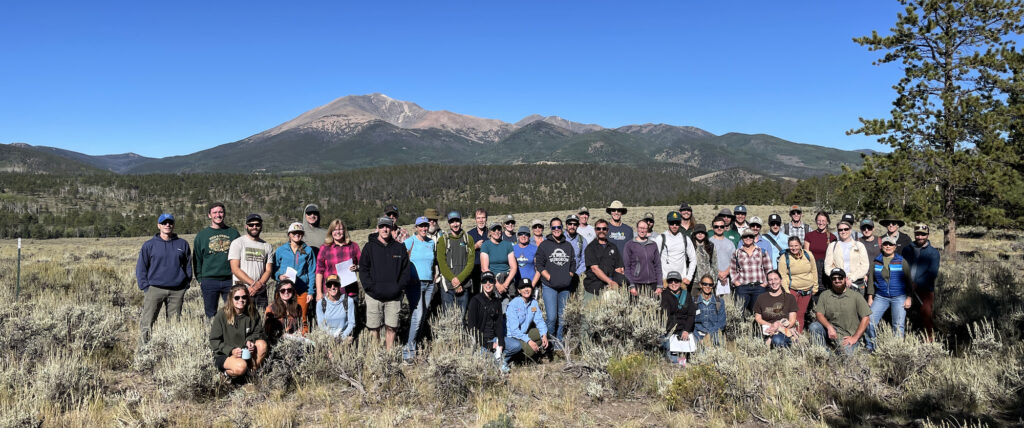
Other field trip information: We will depart from Western Colorado University at 8am, and plan to return back to Western Colorado University at 2pm. There will be an opportunity for folks to park and ride closer to the project sites if you are heading home to the north and don’t want to go all the way back to Gunnison at the end of the field trip, but the main portion of the field trip will require carpooling as the sites we are visiting can only hold a small number of vehicles. Field trip registrants will receive detailed logistical information via email as we get closer to the day of the field trip.
Field trip speakers:


2025 Colorado Forest Collaboratives Summit: Summary & Resources | blog post by Audrey Miles Cherney, Esther Duke, Ch’aska Huayhuaca, and John Sanderson
2024 Colorado Forest Collaboratives Summit: Summary & Resources | blog post by Katie McGrath Novak of Colorado Forest Collaboratives Network
10 of Katie’s Favorite Photos from the 2024 Colorado Forest Collaboratives Summit | blog post by Katie McGrath Novak of Colorado Forest Collaboratives Network
The 2024 Colorado Forest Collaboratives Summit: A Hub of Connection and Innovation | blog post by Sandi Good of Peaks to People Water Fund
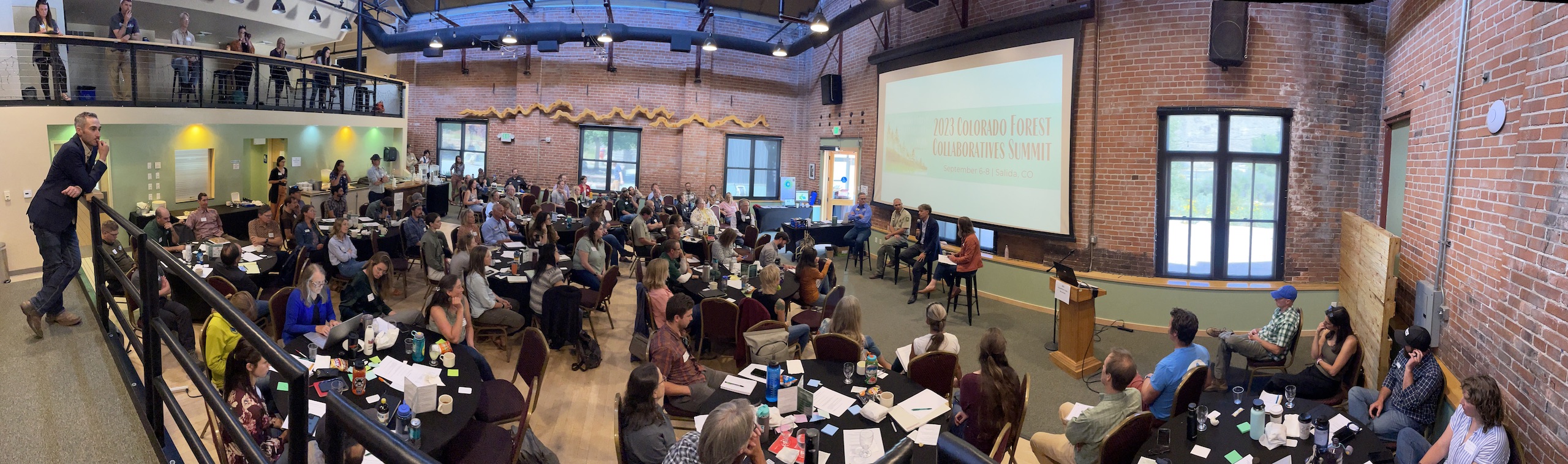
2023 Colorado Forest Collaboratives Summit: Summary & Resources | Blog post by Katie McGrath Novak of Colorado Forest Collaboratives Network
15 of Katie’s Favorite Photos from the 2023 Colorado Forest Collaboratives Summit | Blog post by Katie McGrath Novak of Colorado Forest Collaboratives Network
2022 Colorado Forest Collaboratives Summit: Summary & Resources | Blog post by Katie McGrath Novak of Colorado Forest Collaboratives Network