
2026 Colorado Forest Collaboratives Summit: Summary & Resources (pg. 4)

In this summary…

Page 1: Introduction and Wednesday Activities

  • Our theme: What does “Collabor-Action” mean?
  • Wednesday, September 9th
    • Training: Taking Action with the Forest Resilience Planning Guide
    • Avista Fire Resilience Challenge
    • Welcome Social

Page 2: Thursday Summit: Morning sessions

  • Land Acknowledgement & agenda roadmap
  • Colorado Cafe: Table discussions & case studies that align with the 30-Year Vision for Forest Health in Colorado

Page 3: Thursday Summit: Afternoon sessions

  • From planning to action: Understanding collaborative readiness through the Upper Gunnison Shared Stewardship Council
  • Leadership panel

Page 4: Friday Field trip & Thank yous! (you are here!)

Friday, September 11th Field Trip: Collaboration and Climate Adaptation in the Taylor Park Area

Field trip coordinators and speakers: 

  • Jonathan Coop, Professor of Environment & Sustainability and Biology, Western Colorado University
  • Dylan Eimer, Lead Project Forester, Colorado State Forest Service
  • Maddie Herro, Rocky Mountain Region Program Manager, National Forest Foundation
  • Mike Tarantino, Supervisory Forester, Colorado State Forest Service
 

Stop 1: Bertha Gulch Stewardship Project

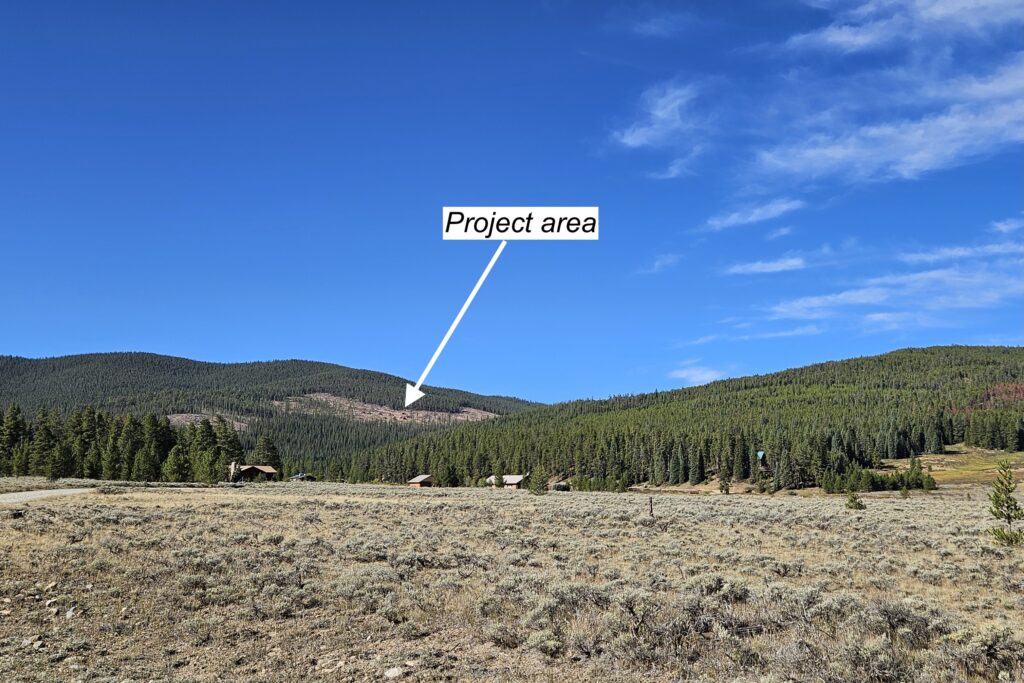
Our first stop on the field trip was the Bertha Gulch Stewardship Project, a recently-completed cross-boundary project spanning 155 total acres across private (20 acres) and US Forest Service (135 acres) land. The project involved multiple partners including the Colorado State Forest Service, US Forest Service, National Forest Foundation, and private landowners. It was funded by Healthy Forests Vibrant Community state grant funding. 

We started by viewing the project site from afar. From this viewpoint, we learned big-picture information about the site. We heard from the private landowners themselves about their connection to the land and what motivated them to do forest treatments in their own back yard. We also heard from Dylan Eimer and Mike Tarantino (Colorado State Forest Service) about the planning process and how partners and funders came together to get the work done.

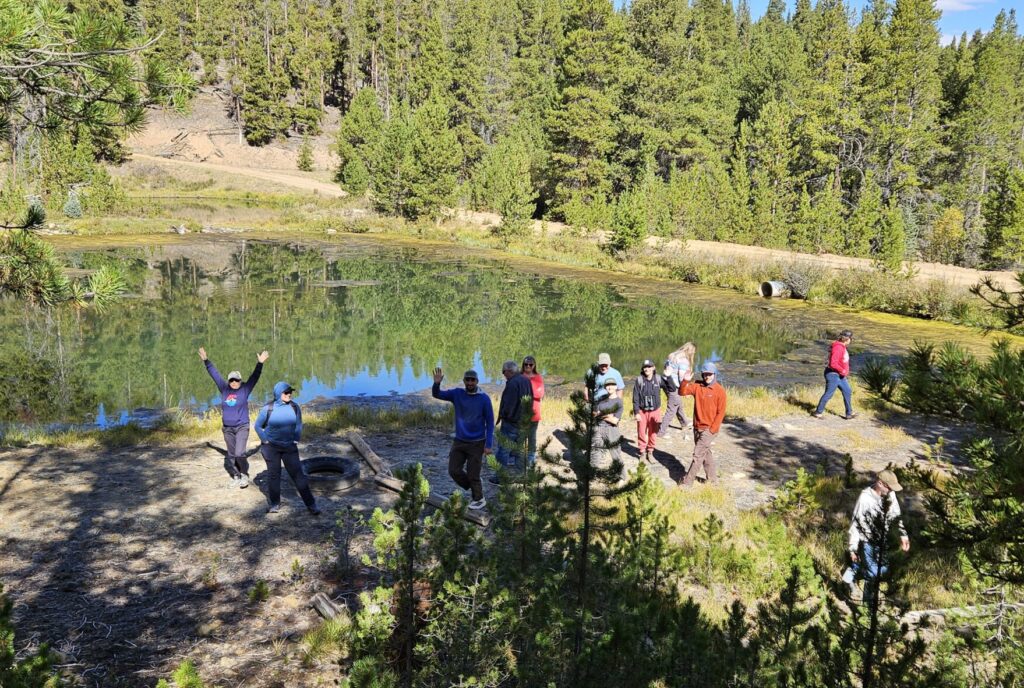
As we hiked into the project site itself, we learned more about the specific prescription details.

A summary from our field trip description: This priority area was identified by the Upper Gunnison Water Conservation District, Gunnison County Community Wildfire Protection Plan, and the Taylor Adaptive Management Group. From a landscape scale view, this section of land was the missing piece of the puzzle, so to speak, between previously harvested ridgetop fuel breaks on US Forest Service lands and defensible space/hand thinning projects on private lands. CSFS capitalized on previously built relationships, collaboration, and momentum from prior projects to gain access to this private parcel and surrounding landlocked US Forest Service land to implement Lodgepole pine clear cuts, overstory removals, and hand thinning treatment methods. By connecting multiple projects together, Taylor Park, Tincup, and the surrounding wildland-urban interface communities are better protected from this new era of uncharacteristic wildfires.

First, we saw the project from afar (above)
Then, we actually hiked up into the treatment area to see it up close.

Stop 2: Taylor Park, Adaptive Silviculture for Climate Change Site

The Adaptive Silviculture for Climate Change (ASCC) Network is ‘a collaborative effort to establish a series of experimental silvicultural trials across different forest ecosystems in the United States and Canada.’ One of the 14 ASCC sites, designed to test out silvicultural practices for climate adaptation, is Taylor Park, CO. In 2022, a team of experts collaboratively identified desired future conditions, objectives, and tactics for resistance, resilience, and transition in the Taylor Park area. After years of planning, the project is now in the implementation phase.

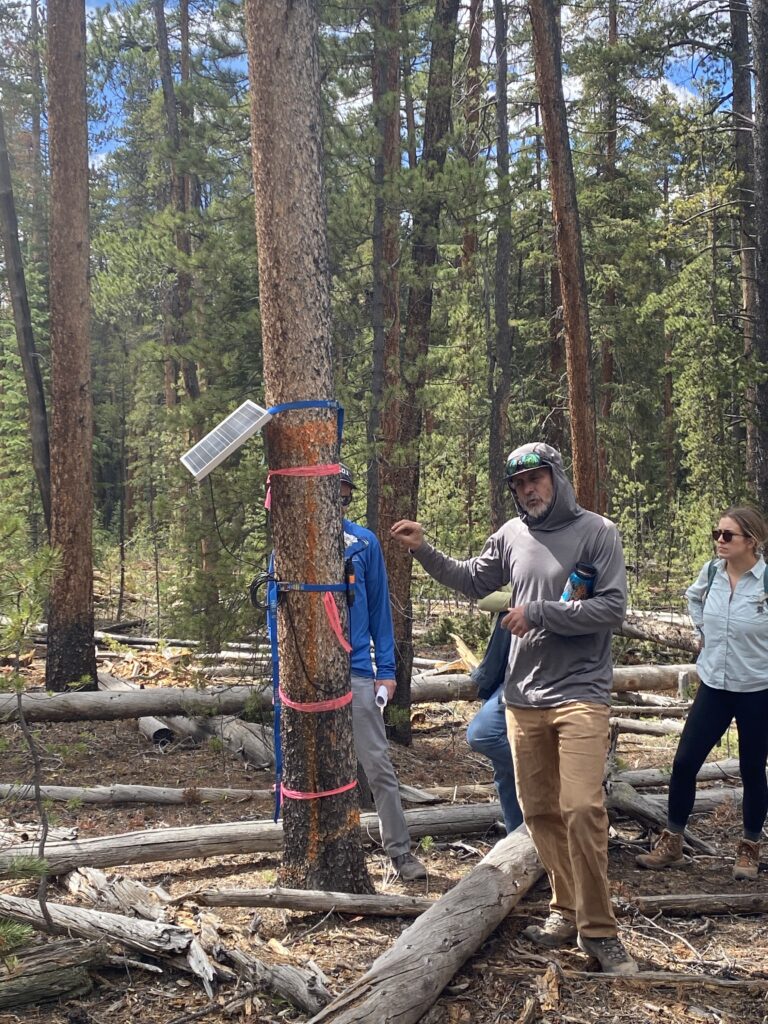
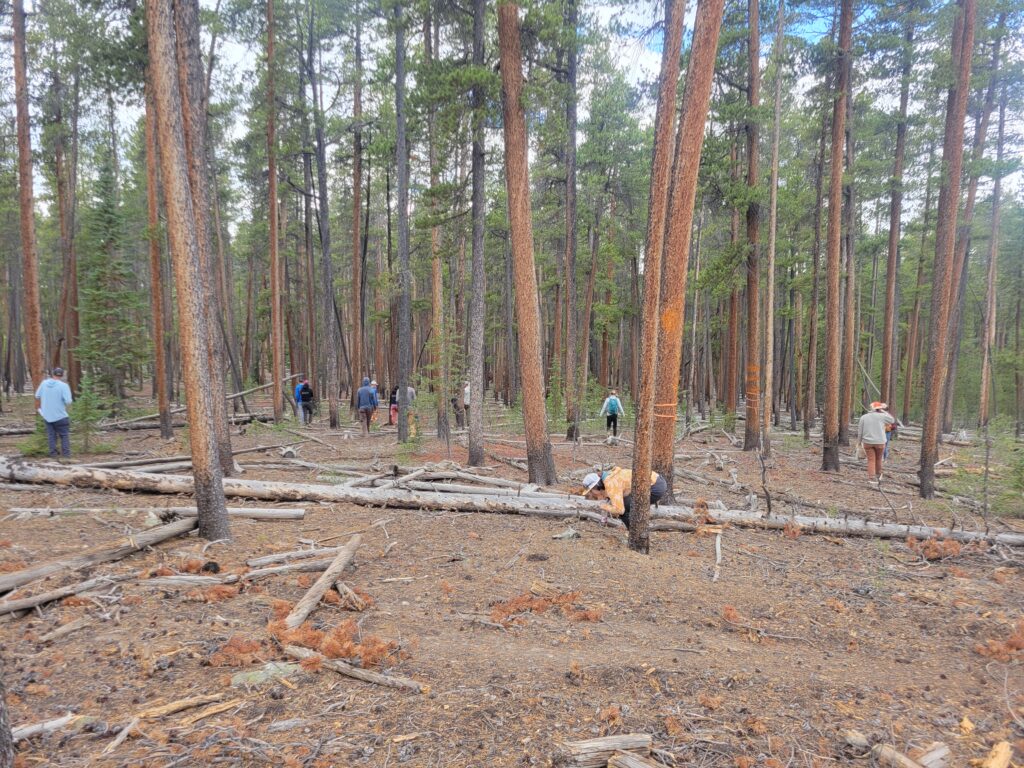
On our field trip, we visited the Trail Creek project in Taylor Park, and heard from Jonathan Coop (Western Colorado University) about the prescription and goals, and what it took to get this site from planning to implementation.

One key takeaway from this field trip stop was the importance of experimenting, learning, and adapting.

You can learn more about the ASCC Network HERE, and about the Taylor Park site HERE.

Jonathan Coop at the ASCC site. Photo credit: Ch'aska Huayhuaca.
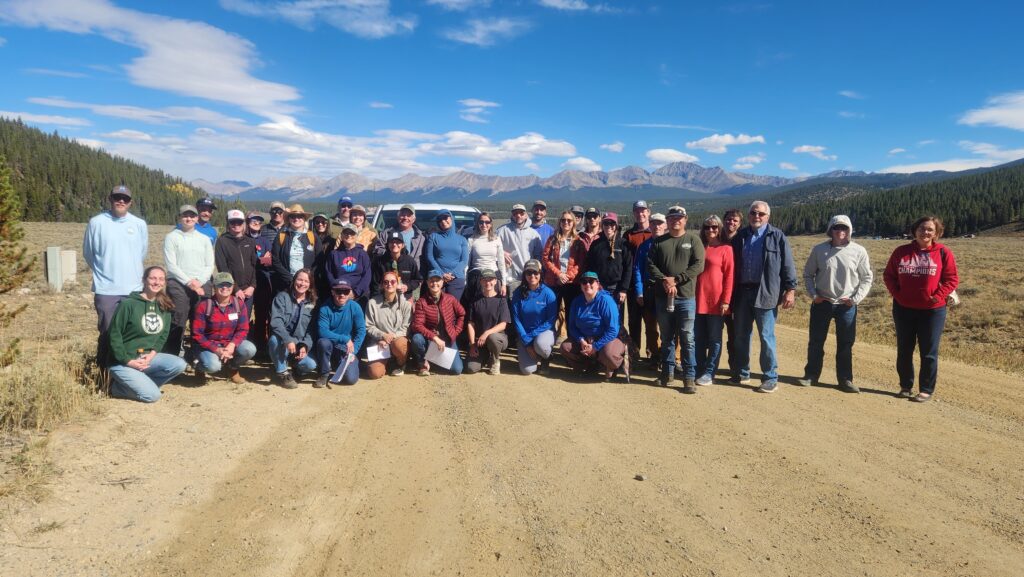
Field trip attendees exploring the site. Photo credit: Emily Swindell.
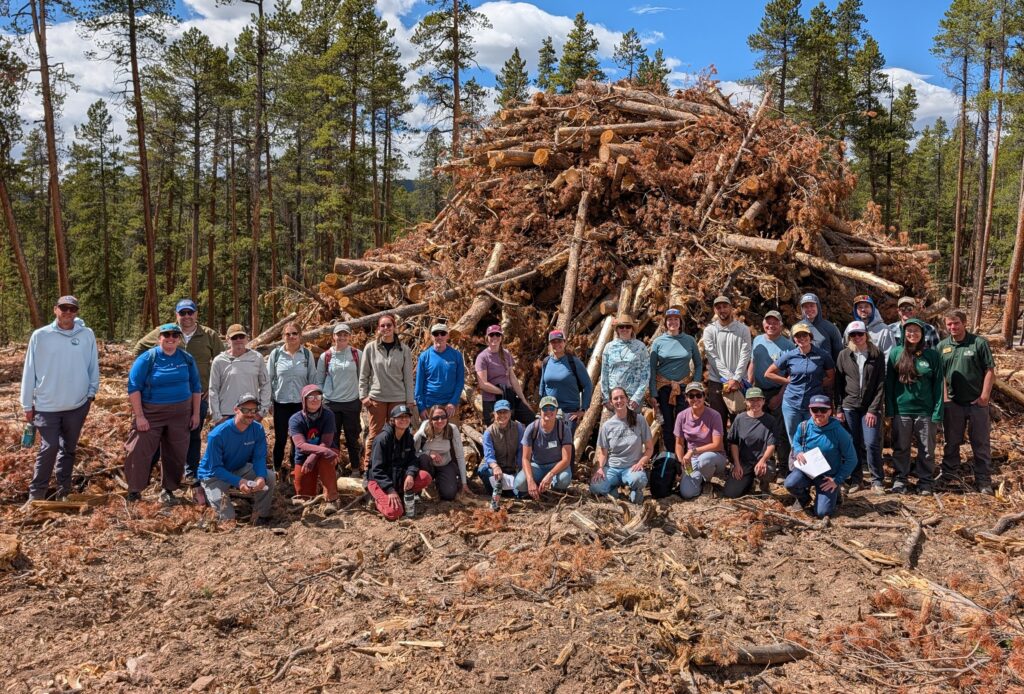
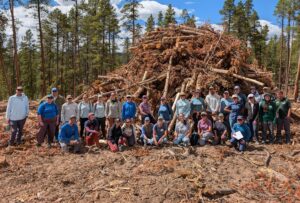
Group photo by a huge burn pile at the ASCC site! Photo credit: Jonathan Coop

We have so many people to thank for making Summit possible!

Our Planning Team:
  • Anthony Culpepper, Mountain Studies Institute. Planning team.
  • Audrey Ek-Psomas, Coalitions & Collaboratives, Inc. Planning team & Bingo facilitator.
  • Ch’aska Huayhuaca, Colorado Forest Restoration Institute. Planning team, training facilitator, & speaker
  • Katie McNovak, Colorado Forest Collaboratives Network, Center for Collaborative Conservation. Event coordinator, planning team, & speaker.
  • Laura Danz, Colorado Forest Restoration Institute. Planning team, training facilitator, & speaker.
  • Elizabeth Lorimer, The National Wild Turkey Federation. Planning team.
  • Audrey Miles-Cherney, Upper South Platte Partnership, CSFS. Planning team, panel moderator, & speaker.
  • Rebecca Samulski, Fire Adapted Colorado. Planning team & speaker.
  • Scott Woods, Colorado State Forest Service. Planning team. 
Field Trip Coordinators & Speakers:
  • Jonathan Coop, Western Colorado University
  • Dylan Eimer, Colorado State Forest Service
  • Mike Tarantino, Colorado State Forest Service
  • Maddie Herro, National Forest Foundation
This summary was written by Katie McNovak, with lots of help from the following note takers & contributors:
  • Anthony Culpepper, Mountain Studies Institute.
  • Laura Danz, Colorado Forest Restoration Institute.
  • Sam Feuerborn, Middle Colorado Watershed Council.
  • Diane French, Blue Elements.
  • Shea Garcia, Arkansas River Watershed Collaborative.
  • Lili Girodie, Keystone Policy Center.
  • Ch’aska Huayhuaca, Colorado Forest Restoration Institute.
  • Melissa Merritt, Blue Forest.
  • Hannah Miller, Center for Collaborative Conservation.
  • Katya Schloesser, University of Colorado Boulder.
  • Brooke Simmons, Colorado Forest Restoration Institute.
  • Jon Rosborough, Forest Trends.
  • Rebecca Samulski, Fire Adapted Colorado.
Thanks to those who shared photos of Summit:
  • Shea Garcia, Arkansas River Watershed Collaborative
  • Emily Swindell, Boulder Valley & Longmont Conservation Districts
  • Jarod Dunn, Colorado Forest Restoration Institute
  • Brett Wolk, Colorado Forest Restoration Institute
  • Ch’aska Huayhuaca, Colorado Forest Restoration Institute
  • Hannah Miller, Center for Collaborative Conservation

2026 Summit Sponsors

Collaborative Canopy Sponsors
Walton Family Foundation Logo
Branching Out Sponsors
Rooted Together Sponsors
Northern Water Logo
Ongoing Supporters of the Colorado Forest Collaboratives Network
Gates Family Foundation Logo
Mighty Arrow Family Foundation
Colorado Forest Collaboratives Network

May 2026 CCC News

Read this month’s CCC Newsletter! We’re reflecting on a recent fellowship, looking forward to Confluence 2026, and as always, find

Read More »
Colorado Forest Collaboratives Network

April 2026 CCC News

Read this month’s CCC Newsletter! Kicking off with a note from our director, “Water in the West is a wicked

Read More »