In this summary…
Page 1: Introduction and Wednesday Activities (you are here!)
- Our theme: What does “Collabor-Action” mean?
- Wednesday, September 9th
Page 2: Thursday Summit: Morning sessions
- Land Acknowledgement & welcome to Western Colorado University
- Agenda roadmap & framing the day
- Colorado Cafe: Table discussions & case studies that align with the 30-Year Vision for Forest Health in Colorado
Page 3: Thursday Summit: Afternoon sessions
- From planning to action: Understanding collaborative readiness through the Upper Gunnison Shared Stewardship Council
- Leadership panel
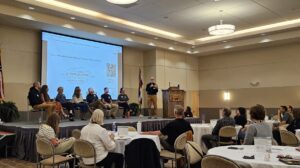
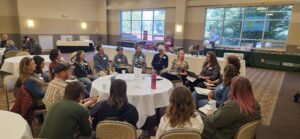
The creation of the Colorado Forest Collaboratives Network (CFCN) was inspired by successes at past Forest Collaboratives Summits, and Summit now represents the flagship annual event for the CFCN. The purpose of the CFCN is to benefit and support place-based forest collaboratives in Colorado by connecting them to information, resources, and each other, and by telling their stories to make their value and needs understood. The purpose of the Summit, the key annual event of the CFCN, is to connect place-based forest collaboratives from across the state and facilitate learning about issues most relevant to collaboratives. Attendees at the Summit include staff from place-based collaboratives across Colorado, agency leaders and staff, funders, and industry. This year the Summit was in beautiful Gunnison, CO, September 9-11, 2026.
To learn more about the CFCN, visit our webpage and/or join our mailing list.
Our theme: What does “Collabor-Action” mean?
When our 2026 Summit planning team began meeting in spring 2026, we combed through a few key documents (including: our blog post, “What Colorado collaboratives want the Ponderosa Mountain Pine Beetle Task Force to Know”; a list of the Colorado Forest Health Council’s 2026 priorities; summaries from our 2025 CFCN All-Partners Meeting; our 2025 Summit summary; and survey feedback from our 2025 Summit) to get a sense for current conversations and identify common sticking points for Colorado’s collaboratives. We noticed that many conversations centered around challenges in moving from planning to implementation, both collaboratively and in a timely manner.
Moving from planning to implementation, both collaboratively and in a timely manner – this became the overarching theme of our 2026 Summit. Calling back to a term used by Colorado State Forester Matt McCombs at our 2024 Summit, we decided to call this “Collabor-Action”.
Collabor-Action combines two words:
Action: We know that ultimately implementation (action) takes place at the local level, at the project scale.
+
Collaboration: At the same time, forest health and wildfire issues are bigger than any project or local context, so collaboration is needed to add meaning to individual actions, planning and coordinating across scales, sectors, land ownership types, etc.
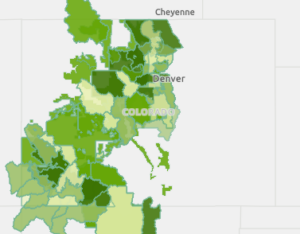
Suggested resource: The Colorado Atlas of Collaborative Conservation
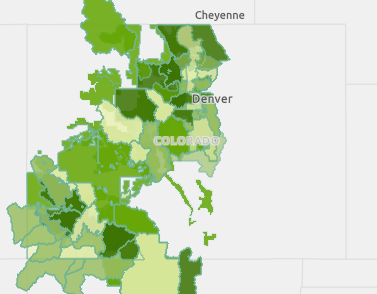
This map of collaborative initiatives in and around Colorado is designed to gain a better understanding of “Who is doing what, where?” Originally designed with each collaborative as a dot on the map, we recently launched the first version of our geospatial map, to better understand the full extent of collaborative coverage. Learn more and view the Atlas HERE. Fill out this update request form to request additions or changes to the Atlas.
“Collaboration” and “Action” are sometimes framed in opposition to one another, that the process of collaboration takes too much time and prevents the on-the-ground work from getting done. However, action without collaboration may not be sustainable; ‘going slow to go fast’ can set up a landscape for achieving shared objectives through multi-benefit, cross-boundary projects, at scale, for the long-term. The terms are not actually in opposition; action is the goal of collaboration, and collaboration can make actions more meaningful. Both, together, are crucial to moving the needle on forest health and wildfire mitigation challenges.
How do local communities make sure that their work is contributing to a bigger, more cohesive picture? And, on the flip side, how do higher-level decision makers help align and support many individual local contexts? To help connect, align, and amplify efforts, we end up with a LOT of plans and initiatives. These plans and initiatives are useful tools to help create shared language, communicate impact, set bigger picture goals, and more.
AND, with so many plans and initiatives out there, it can feel overwhelming.
One role of the Colorado Forest Collaboratives Network (CFCN) is to promote two-way dialogue between local entities and state leadership, ensuring local needs are understood, represented, and meaningfully scaled up into state plans and initiatives.
The CFCN is working to ensure that local collaboratives are represented in state plans, and that these plans can be useful as tools for collaboratives to make a bigger picture impact and connect with leadership.
At this year’s Summit, we dove into just a few of the many plans out there, and explored how these plans help us make sense of and scale up our “collabor-action.”
Examples of where the CFCN has helped integrate collaboratives’ perspectives into high-level planning efforts:
- Statewide Prescribed Fire Strategy – The CFCN co-hosted a focus group for collaboratives to inform the strategy, and we invited individuals from collaboratives to speak directly to the Colorado Fire Commission’s Prescribed Fire Subcommittee. Multiple case studies in the Strategy feature place-based collaboratives.
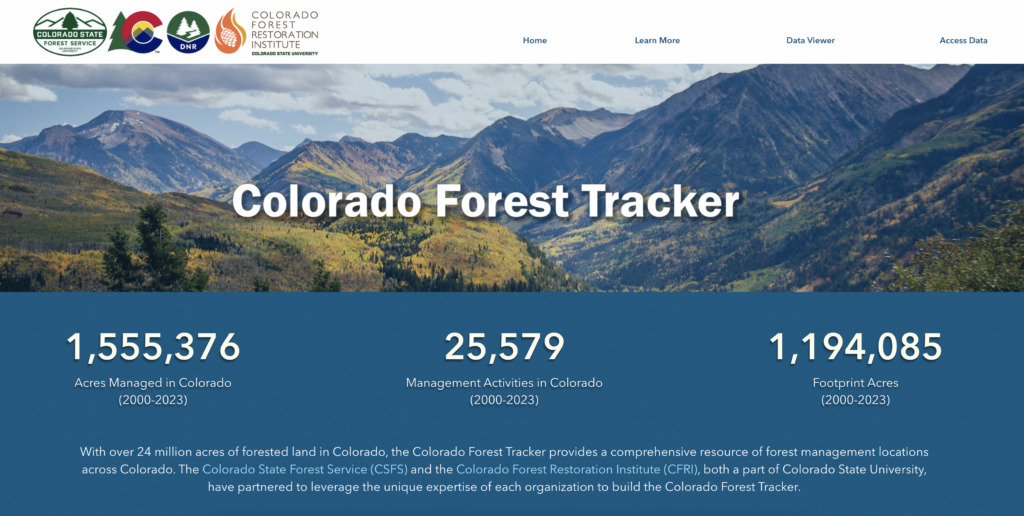
- Colorado Forest Tracker – The CFCN has hosted several Branching Out sessions about the Forest Tracker, and we regularly share opportunities to submit data to the Tracker.
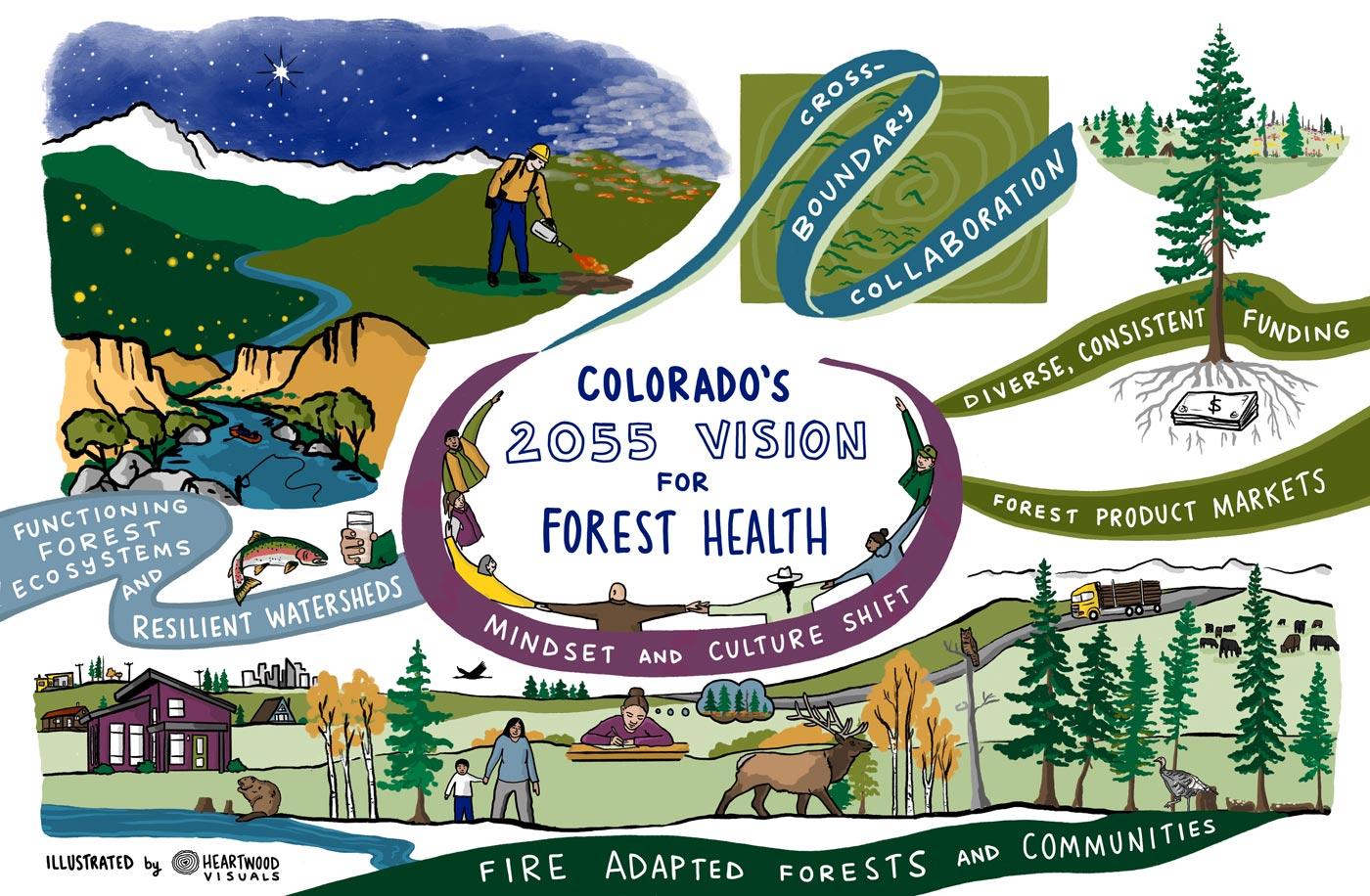
- 30-Year Vision – The CFCN co-hosted a focus group for collaboratives to inform the 30-Year Vision. Ultimately, one of the 5 core Vision themes is “Cross-Boundary Collaboration”.
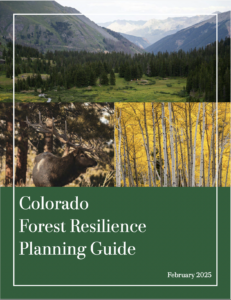
- Forest Resilience Planning Guide – The CFCN co-hosted a listening session for collaboratives to inform this Guide, and the Guide is structured with the Collaborative Stages of Readiness framework in mind.
Suggested resources
Wednesday, September 9th
Taking Action with the Forest Resilience Planning Guide
Hosted by CDR Associates and the Colorado Forest Restoration Institute
Training facilitators:
- Abby Hall, Senior Program Manager, CDR Associates
- Ch’aska Huayhuaca, Senior Program Manager, Collaborative Adaptive Management, Colorado Forest Restoration Institute
- Laura Danz, Knowledge Synthesis, Communications, and Applications Specialist, Colorado Forest Restoration Institute
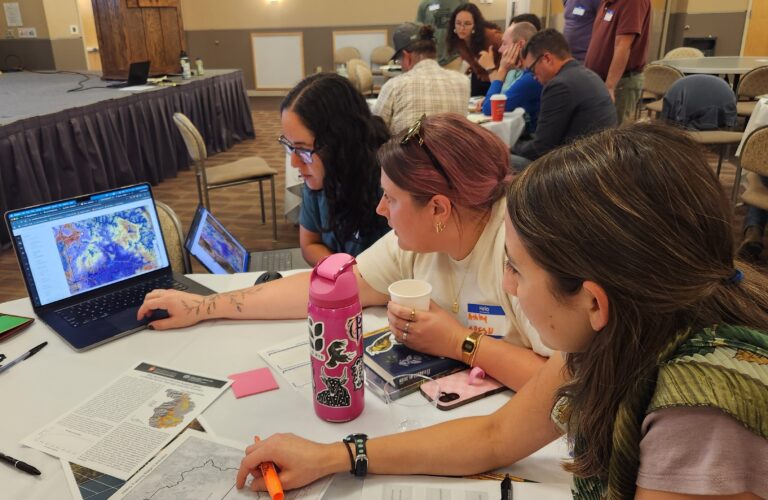
Through peer discussion, hands-on exercises, and real-world examples, this training taught participants practical ways to use the Colorado Forest Resilience Planning Guide in their work.
Participants learned to…
- Apply the Forest Resilience Planning Guide as a resource for collaboratives
- Design collaborative processes that support different, yet equally defensible, implementation choices.
- Identify approaches for overcoming common barriers to moving from planning to implementation.
- Incorporate principles of consensus building and collaborative adaptive management to your collaborative efforts.
The training incorporated a local case study: the Upper Gunnison Shared Stewardship Council’s Community Wildfire Protection Plan. This case set the backdrop for an iterative scenario-style activity where participants practiced identifying community values, evaluating wildfire risk to those values, prioritizing areas for forest management, and discussing approaches to funding to get the work done. Finally, participants also reviewed the collaborative adaptive management cycle.
We asked participants to track activators of, challenges to, and benefits of collaboration on flip chart paper. You can view all flip chart responses in this document. Here is a brief summary of takeaways from the discussion:
- Activators of collaboration: Collaboration is often sparked by a shared challenge, urgent threat, or recognized need—especially when wildfire, forest health, or other impacts create a sense of urgency. It is also enabled by shared values, relationships, trust, complementary capacity, and the resources or authority needed to act together.
- Challenges to collaboration: Collaboratives face ongoing challenges in sustaining engagement, capacity, funding, and momentum over time, particularly amid competing priorities, turnover, and uncertainty. Differences in goals, approaches, commitment, and organizational processes can also make it difficult to maintain trust, coordination, and progress from planning to implementation.
- Benefits of collaboration: Collaboration brings together diverse perspectives, relationships, expertise, resources, and capacity that individual organizations often cannot access or leverage alone. This collective capacity can support more coordinated, cross-boundary action, strengthen shared voice and influence, and increase the reach and impact of projects.
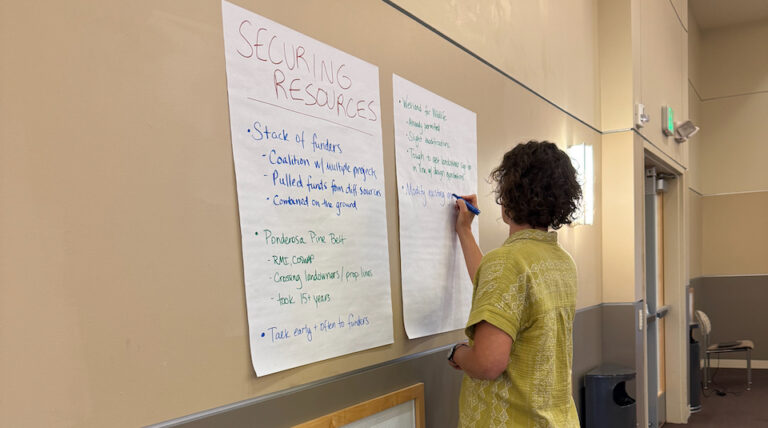
Another key takeaway from the workshop was best practices for securing resources:
- Stack funders: Build a portfolio of projects and funding sources that can be combined to support on-the-ground work.
- Identify strategic areas: Prioritize strategic landscapes or areas that cross landownership boundaries. For example, the RMI Ponderosa Pine Belt took 15+ years to identify, plan, and implement.
- Talk with funders early and often: Build relationships and understand funders’ priorities before opportunities arise.
- Get projects permitted early: Where possible, complete permitting before applying for funding.
- Identify projects with shared goals: Understand which other projects could meet similar goals, and maintain flexibility to modify grants or pivot funds when logistical hurdles arise.
- Partner with prior grantees: Learn from organizations that have successfully received funding in your area; their expertise can provide valuable funder relationships and lessons learned.
- Pursue long-term, sustainable funding: Steady funding sources can support operations and maintenance while providing a foundation for gathering resources over time.
- Start with prioritized projects: Develop a clear list of priority projects, then work with funders to identify which align with their missions. Be prepared to clearly explain the rationale behind your map and priorities.
Funders, collaborative coordinators/facilitators, communication specialists, and technical experts were among those who attended the training. Folks engaged in meaningful discussions and incorporated their real-world experiences and perspectives into the activities. One piece of feedback we heard is that the Forest Resilience Planning Guide has the potential to be a useful tool to build shared language and communicate the value of the qualitative outcomes of collaboration to funders that enable action.
Avista Fire Resilience Challenge: Engage Your Community in Resilience Planning Through Scenario-Based Role-Play Games
Facilitated by:
- Katya Schloesser, Associate Director for Curriculum and Teacher Training, Cooperative Institute for Research in Environmental Sciences, University of Colorado Boulder
- Krystal Brown, Gunnison High School Teacher, Gunnison Fire Department Volunteer Firefighter, and HEART Force Fellow
Section summary written by Katya Schloesser
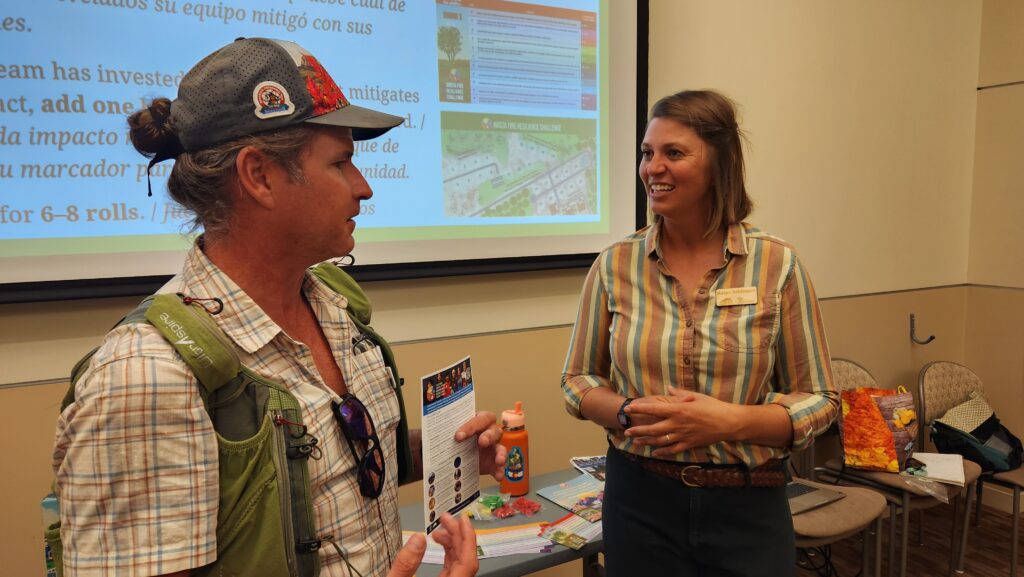
The Avista Fire Resilience Challenge (a part of the broader Hazard Education, Awareness, and Resilience Task Force [HEART Force] curriculum) is a scenario-based role playing game where participants work collaboratively to build community wildfire resilience. Designed with young learners in mind, the game is educational for all ages!
Summit attendees had the opportunity to learn more about the game by playing. They were given fair warning that experts usually take longer to make decisions in the game, given their familiarity with the topic. Experts are also liable to cheat (we won’t name names…but her name rhymes with Tamulski). Participants generated a multitude of ideas for using the game, including as an ice-breaker at a professional event, kicking off a CWPP planning process, or after Thanksgiving Dinner with family.
You can learn more about the game, watch a how-to-play video, and order it for your community, here.
Welcome Social
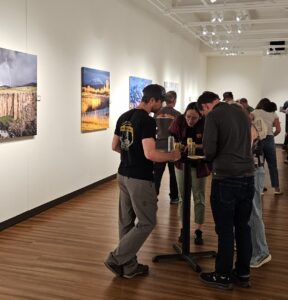
We gathered in the beautiful Art Gallery at Western Colorado University for a social to welcome guests, and played networking Bingo to get to know one another!
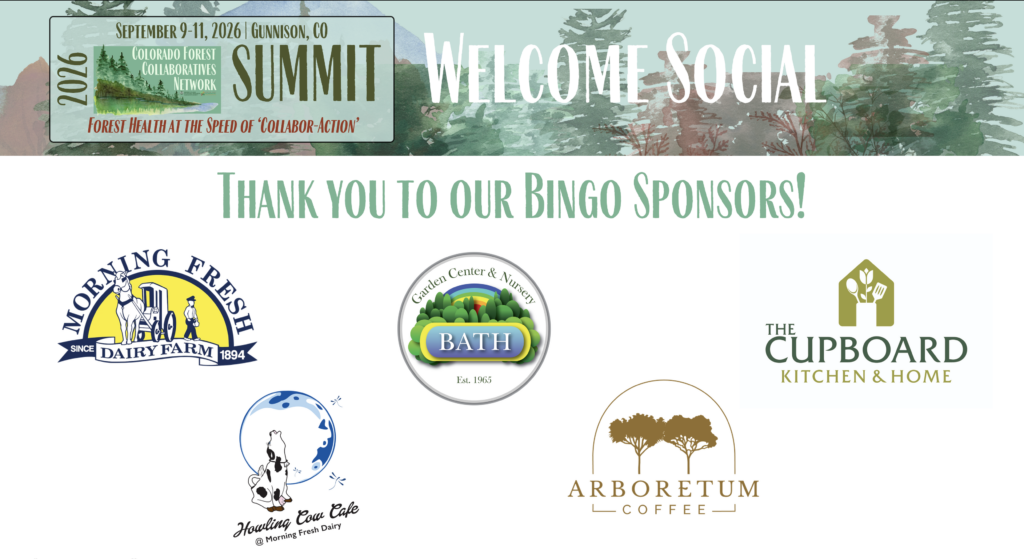
We are grateful to the following sponsors for providing our Bingo prizes: Morning Fresh Dairy Farm, Bath Garden Center and Nursery, The Cupboard Kitchen and Home, Howling Cow Cafe, and Arboretum Coffee.
Continue reading…
Page 1: Our theme & Wednesday activities